Geocaching with the Texas A&M Forest Service
If you enjoy the outdoors and the thrill of discovery, geocaching offers a unique way to connect with nature while exploring new places. Geocaching is an outdoor "treasure hunt" using your smartphone or GPS-enabled device to locate hidden containers known as geocaches. The activity combines technology with the joy of discovery, and it is accessible for people of all ages and experience levels.
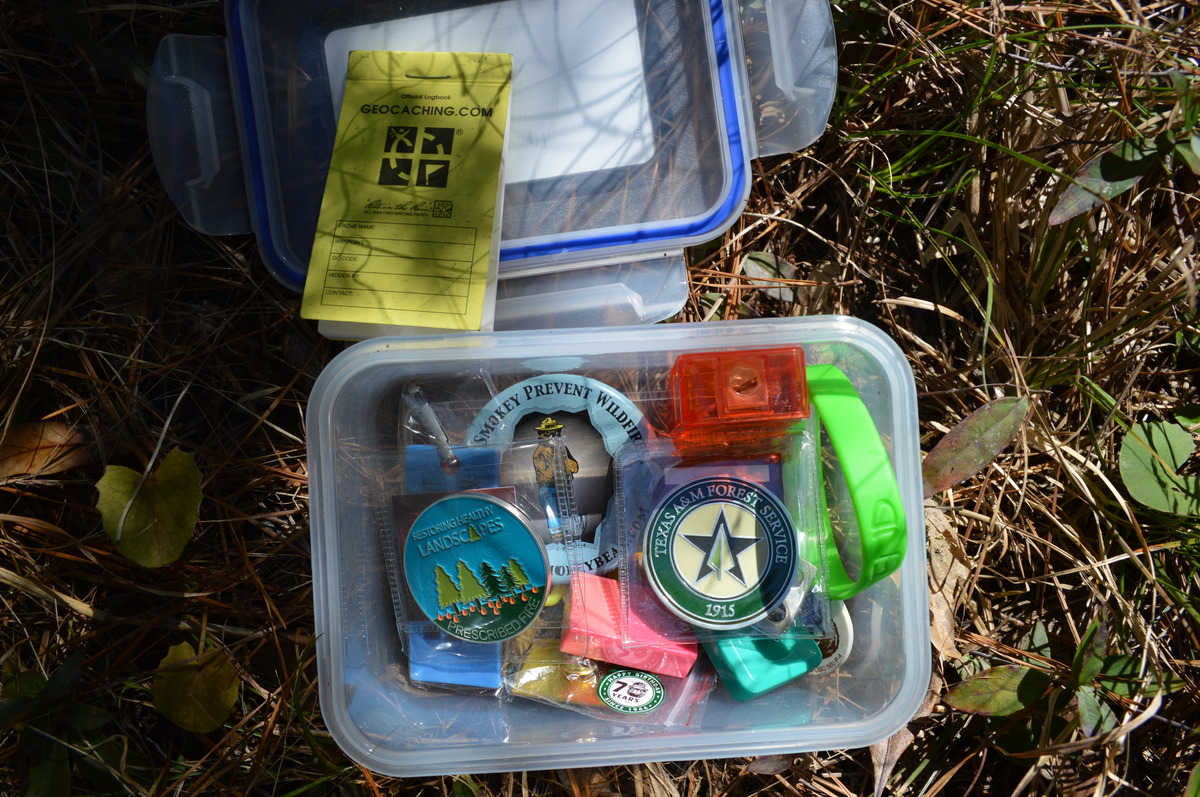
What Is Geocaching?At its simplest, geocaching involves locating small hidden containers—geocaches—that contain a logbook and often trinkets for trading. After signing the logbook, you may take or leave an item (according to the rules of that particular cache), then log your find online. According to one study of the activity, geocaching "involves using a handheld GPS device to find hidden caches in areas based on clues posted on the Internet."
As noted by the Texas A&M Forest Service (TAMFS), "The 'treasures' can vary from a large container with toys and trinkets to a small container designed to blend in with the surrounding environment. There are more than 3 million geocaches hidden worldwide in a variety of locations and difficulty levels."
Why the Texas A&M Forest Service Engages in GeocachingTAMFS uses geocaching both as a recreational activity and as a tool for public engagement. The agency has placed a series of geocaches at its offices, state forests, and arboretums throughout Texas "to showcase different aspects of our agency and the properties we own or manage."
Through geocaches and special trackable items called geocoins, TAMFS highlights topics such as wildfire prevention, prescribed fire, and forest stewardship. For example:
- In celebration of Smokey Bear's 70th birthday in 2014, 70 trackable geocoins were placed, and they have since traveled across all 50 states plus Washington D.C., been found in 41 countries on five continents, and logged over 720,000 miles.
- A 2015 geocoin campaign focusing on prescribed fire (an important ecosystem management tool) was launched with 100 coins that have visited 49 states, 38 countries, and traveled over 578,000 miles.
- In 2019, 75 geocoins were released for Smokey's 75th birthday; these have visited 47 states, three countries, and traveled over 196,000 miles.
Most recently, in recognition of the rare back-to-back solar eclipses in Texas (an annular eclipse in October 2023 and a total eclipse in April 2024), TAMFS released 100 "Texas Two-Step Solar Eclipse" geocoins, which as of now have visited 37 states, 14 countries, and traveled more than 139,000 miles.
These efforts tie a recreational pursuit (geocaching) with educational and stewardship goals—encouraging people to explore, learn, and engage with forest-land management and wildfire awareness.
How to Get Started- Search for geocaches near your location—either through the app or on the website for geocaching.
- Prepare for the outing: wear appropriate footwear, bring water, and follow all property/land-use rules.
- When you find a cache: sign the logbook, follow any trade-item rules, log your find online, and ensure you reseal the container securely.
Consider visiting a
TAMFS-hidden geocache to explore one of the agency's properties and learn more about forest stewardship firsthand.
Want to Place a Geocache on TFS-Managed Land?TAMFS has published formal guidelines for geocaching and related activities on its managed lands. Some key provisions include:
In many cases a permit is not required (except, for example, at the W. Goodrich Jones State Forest) — but placement must comply with agency rules.
Containers must be non-breakable, have a closing mechanism to prevent wildlife exposure, and contain no food, medications, lighters/matches, alcohol, weapons, etc.
Texas A&M Forest Service
Caches may not be buried, placed on/in protected or historically sensitive sites, cause creation of new trails or degrade scenic views.
Cache owners are expected to maintain containers, remove inappropriate items, and comply with removal/inspection procedures.
For full details see the TAMFS "
Guidelines for Geocaching and Related Activities" (PDF).
Texas A&M Forest Service
Why It MattersGeocaching offers more than just a fun outing. According to Schneider & Chavez (2012), the sport of geocaching has been recognized as part of the evolving role of technology in outdoor recreation. It was estimated that roughly 3.5% of U.S. residents age 16 and older participated in geocaching around 2010 (~8 million people) — suggesting significant interest in this form of nature-based activity.
In the context of forest and land management, using geocaches and geocoins allows agencies like TAMFS to engage visitors in meaningful ways, promoting stewardship, awareness of wildfire risk and ecosystem management, and encouraging exploration of forested lands.
Final ThoughtsWhether you're an experienced geocacher or just looking for a fun way to explore the outdoors, geocaching on TAMFS-managed lands offers a unique opportunity. By participating, you're not only finding hidden treasures, you're connecting with Texas forests, learning about wildfire prevention, and joining a broader community of stewards.
Pull out your smartphone, choose your next destination, and start exploring. Happy caching!

 Posts
Posts

